


The Price Conversation You're Not Having with Your Best Customers
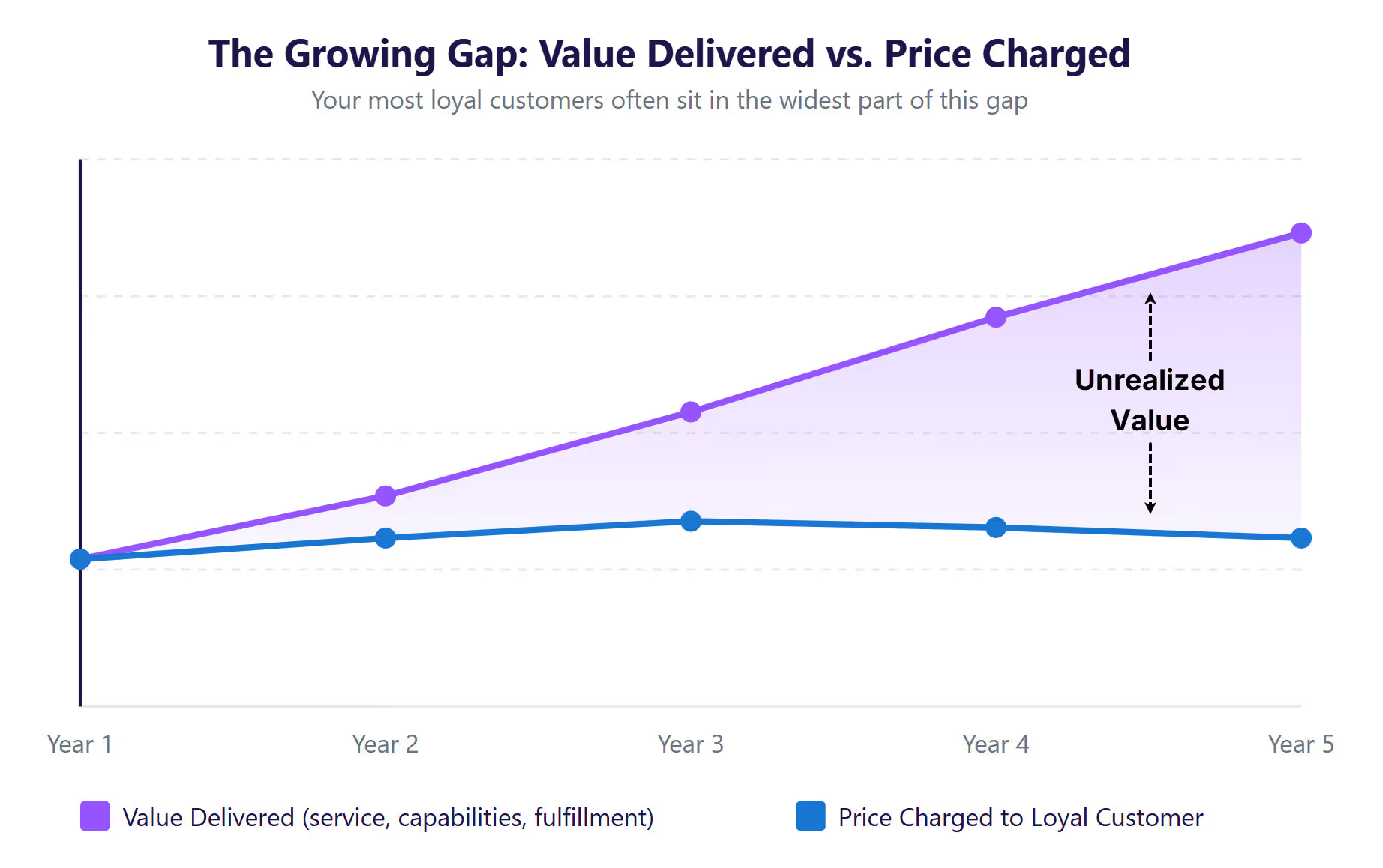
Your most loyal customers are often your most under-priced. And they're usually willing to pay more; if you can articulate why.
That's not a provocative claim. It's what the data shows, over and over, across B2B manufacturers and distributors of every size. The customers who've been with you the longest, who order the most consistently, who rarely complain? They're often paying rates that were set years ago, carried forward on autopilot, and never revisited.
Not because anyone decided those prices were right. Because nobody wanted to have the conversation.
The Fear That Costs You Margin
It makes sense on the surface. These are your best relationships. Your sales team knows them by name. They pay on time. They don't shop around (or at least, you hope they don't). Why risk it?
So the price stays flat. Maybe it gets a token annual increase. Meanwhile, your costs have moved. Your value has grown. You've invested in better service, faster fulfillment, broader capabilities. But the price doesn't reflect any of that.
Here's the thing: your best customers usually know they're getting a good deal. They're sophisticated buyers. They understand market dynamics. And most of them would rather have an honest conversation about value than get surprised by a blunt increase with no context.
Value Conversations vs. Price Conversations
There's a meaningful difference between these two approaches, and it's one that many B2B organizations never think about clearly.
A price conversation sounds like this: "We're raising prices 4% effective next quarter." It's transactional. It's defensive. And it puts your customer in a position where the only rational response is to push back.
A value conversation sounds different: "Here's what's changed in how we serve you. Here's what we've invested in. Here's what that means for your business." It reframes the discussion around mutual benefit, not extraction. You’re also effectively giving your customer the thoughts and even words they can adopt in explaining the value and rationale to their colleagues.
Tim Smith puts it well in Pricing Done Right: pricing is a cross-functional discipline, not a back-office calculation. That means the conversation about price needs to be grounded in the value your organization actually delivers, not just in what your cost model says you need. There are other great resources out there to help you with both identifying and communicating value in the sales process. Stephan Liozu has several books on this topic, and the firm, Holden Advisors are experts on putting this into play in your commercial teams.
What This Looks Like in Practice
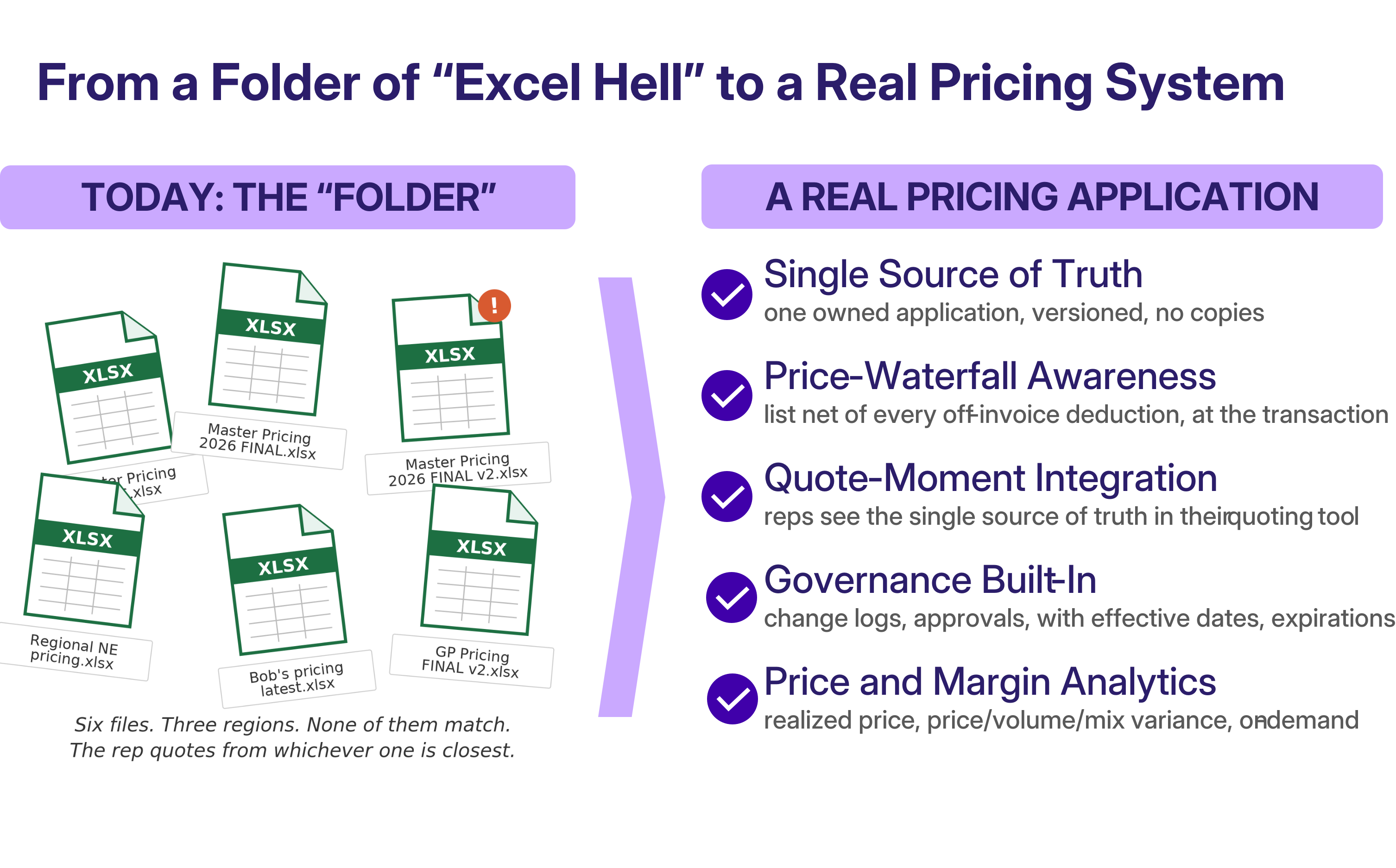
Start with your top 20 accounts. Pull the pricing history. Look at how their rates have (or haven't) moved over the past three to five years relative to your cost changes, your service improvements, and the broader market. Shameless self-promoting aside: a modern software system like Revomo can automate this for you!
Then ask yourself some questions like: if this customer came to you today as a new prospect, what would you quote them? What’s changed in our offerings and the market in general since we established this price?
The gap between that number and what they're actually paying is your unrealized value. Not margin you're "leaving on the table" (a phrase that implies carelessness), but value you've been delivering without being compensated for it.

The fix isn't a surprise price hike. It's a structured conversation. One where you show up with data, acknowledge the relationship, and make a case for why an adjustment reflects the reality of what you're providing today.
The Real Risk
The risk isn't that your best customers will leave over a well-articulated value adjustment. The real risk is that you keep quietly subsidizing your strongest relationships while squeezing margin from newer or smaller accounts to compensate. That's how pricing architectures get distorted. And it's how you end up with a margin profile that doesn't match your customer value profile.
Your best customers deserve your best pricing discipline. That starts with a conversation.
When did you or your colleagues in Sales, last have a value conversation vs. a price conversation with your most important accounts?
.avif)
in your inbox every week

in your inbox every week

