


The Three Primary Pricing Methods Every B2B Company Uses (Intentionally or Not)
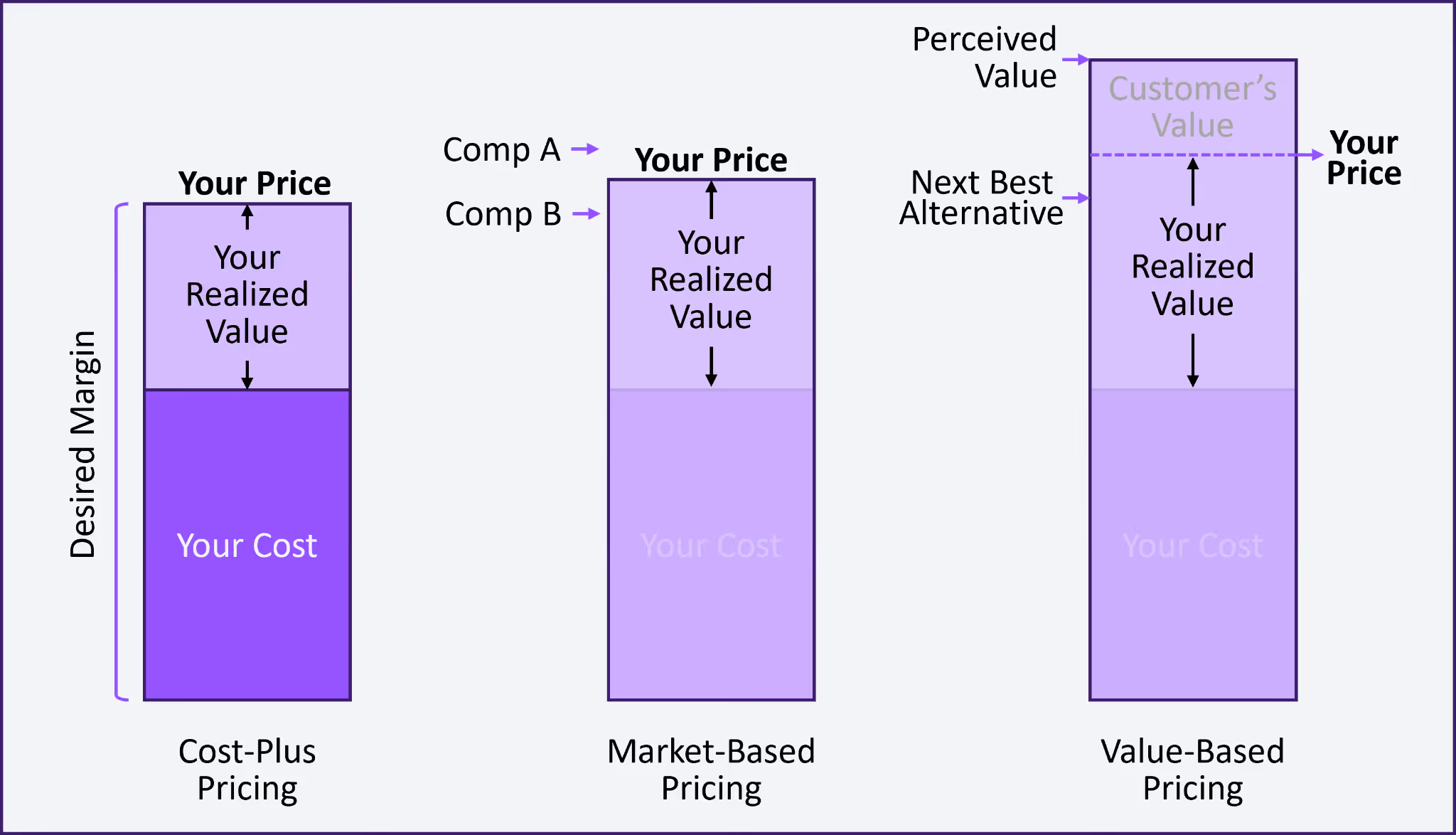
Every price your company quotes can be traced back to one of three primary methods. You might not have named them. You might not have chosen them deliberately. But one of them is behind your prices right now. And knowing when to use which one appropriately, is incredibly important.
Let’s break them down…
1. Cost-Plus Pricing
How it works: Start with what it costs you to make or source the product, then add a markup (note: markup is NOT the same thing as margin). If your cost is $50 and your target margin is 30%, your price is roughly $71.
It’s simple, predictable, and by far the most common approach in B2B manufacturing and distribution. It’s also the method most likely to leave money on the table. Why? Because in a free market economy, what it costs you to deliver your product or service really has nothing to do with what it’s worth to the customer buying it. A specialty fastener that costs you $2 to manufacture might save your customer $500 in downtime. Cost-plus would never capture that. And if you gained a cost-savings by some innovative new engineering approach or smart supply-chain operation, then cost-plus would say that all of that value you created would immediately be transferred to your customer(s).
2. Competitive / Market-Based Pricing
How it works: Look at what competitors charge for similar products and set your price in that range. If your three main competitors price an industrial pump between $1,200 and $1,400, your pump should land somewhere in that window.
Competitive pricing is useful information for understanding relative positioning. It may indicate what the market will bear - if your competitors know what they’re doing. But here’s the thing, folks: matching the market is not a pricing strategy. It’s a margin surrender position. Your competitors might be stupid. They might be losing money. Or they might be delivering a fundamentally different value proposition. Pegging your price to theirs assumes none of that matters.
3. Value-Based Pricing
How it works: Prices are based on the perceived value that your product or service delivers to your customers, relative to their next-best alternative. Don’t forget though, perceived value is determined by your customer, not you.
This approach is the gold standard, and yes, the hardest to execute. If your MRO supply program reduces a customer’s unplanned downtime by 15%, that has a dollar value in their operation. Value-based pricing asks: what is that improvement actually worth, and are we capturing a fair share of it?
It requires a solid understanding your customer’s business, not just your own cost structure. That’s why most companies default to the first two methods. But it’s also why the companies that invest in value-based approaches consistently outperform on margin.
So Which Method Should You Use?
The honest answer: probably all three, depending on the product line and situation. Cost-plus has a role for where differentiation is minimal or where costs are highly volatile and you and your customers agree to a risk-sharing approach (e.g. index or formula-based pricing). Competitive intelligence should always inform your pricing — just not dictate it. And value-based pricing is where the real margin opportunity lives, especially for your differentiated products and services.
The problem isn’t that companies use cost-plus at all. It’s that too many of them use cost-plus for nearly everything — including the products and relationships where they’re delivering significant value they never price for. Costs are very important to understand, and are actually critical in determining your margin floor — an internal policy set by Finance that ensures margin control.
The most effective B2B pricing programs don’t pick one method and apply it uniformly. They match the method to the product, the customer segment, and the competitive context. That’s where pricing starts to become a real discipline rather than just a number on a quote.
What pricing method does your company rely on most? And is that a deliberate choice — or just the way it’s always been done? I’d love to hear your take.
.avif)
in your inbox every week

in your inbox every week

